
Bioidentical Hormone Replacement Therapy in the Anti-Aging Clinical Setting: An Official Position St
17 years, 7 months ago
15576
0
Posted on Aug 24, 2006, 11 a.m.
By Bill Freeman
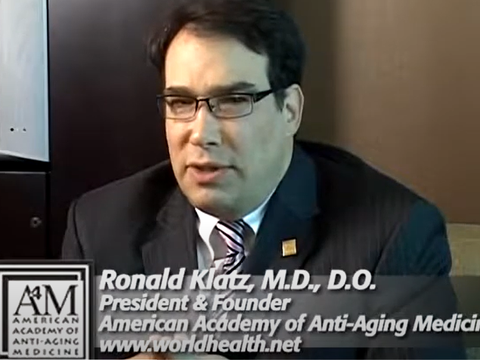
August 14, 2006 / CHICAGO Hormone replacement therapy (HRT) is the replacement of physiological levels of hormones that decline as a result of a specific disease state. The American Academy of Anti-Aging Medicine (A4M; www.worldhealth.net), an international medical society of 18,500 physicians and scientists from 87 countries, is composed of physician members who are responsible for the daily medical care of millions of patients worldwide. It is the position of the A4M that the use of hormones in aging patients to replenish these levels to a youthful physiologic state, when conducted by qualified physicians trained in the practice of treating age-related hormonal declines, constitutes a legitimate and important life-enhancing, life-extending medical application.
The debate and discussion over the safety of hormone replacement therapy continues to remain a focal issue in anti-aging medicine. In 2002 in the United States, the National Heart, Lung, and Blood Institute (NHLBI), a government agency, stopped the large-scale, multi-center trial of combined estrogen and progestin therapy, administered as part of the group's Women's Health Initiative (WHI) study of healthy menopausal women. The researchers terminated this study element because they found an increased risk of invasive breast cancer and coronary heart disease that outweighed the benefits from the hormone replacement therapy. However, NHLBI failed to disclose that their researchers did not use bioidentical hormones in the treatment. Bioidentical hormones have the same chemical structure as hormones that are made in the human body. The term "bioidentical" indicates that the chemical structure of the replacement hormone is identical to that of the hormone naturally found in the human body. In order for a replacement hormone to fully replicate the function of hormones which were originally naturally produced and present in the human body, the chemical structure must exactly match the original. Thus, bioidentical replacement therapy (BHRT) is a method by which replaced hormones follow normal metabolic pathways so that the essential active metabolites are formed in response to the treatment. The molecular differences between bioidentical and non-bioidentical may prove to be the defining aspect in terms of hormone replacement therapy safety, and failure to make this differentiation and thereby alarm the public could be construed as misleading. Furthermore, natural - rather than synthetic - forms of hormones are associated with greater bio-availability, that is they are taken up by the body more readily and utilized more effectively.
Regrettably, a number of articles recently appearing in various newspapers and magazines have falsely suggested that BHRT is unsafe and ineffective.
Experienced anti-aging physicians have been prescribing BHRT for more than 20 years. For women, benefits may include:
- reduced osteoporosis and restoration of bone strength
- reduced hot flashes and vaginal dryness
- better maintenance of muscle mass and strength
- improved cholesterol levels
- reduced risk of endometrial and breast cancer
- reduced risk of depression
- improved sleep
- better mood, concentration and memory
- improved libido
- fewer side effects than with synthetic hormones
[Reed KD. Natural hormone replacement therapy: what it is and what consumers really want. International Journal of Pharmaceutical Compounding. 2001;5(5):332-335; Drusko J. Natural isomolecular hormone replacement: an evidence-based medicine approach. International Journal of Pharmaceutical Compounding. 2000;4(6):414-442; Boothby L, et al. Bioindentical hormone therapy: a review. Menopause. 2004;11(3):356-367.]
Laboratory testing is essential to the safe and scientific application of anti-aging hormone replacement therapy. Just as it is substandard care for a physician to blindly administer insulin to a diabetic patient without regular monitoring and reliable laboratory analysis, so to would it be for any physician to administer hormone replacement therapy without appropriate monitoring and laboratory analysis.
Safe optimization of essential hormone levels in the deficient and symptomatic patient is the goal of anti-aging endocrinology. This requires careful monitoring of bio-available hormone levels. This also requires establishment of baseline laboratory data and regular analysis on at least a semi-annual basis in order to achieve the safest and most effective hormonal balance at the lowest possible dose.
The goal of BHRT is to optimize function and prevent morbidity with aging, and to enhance quality of life. With proper modification, adjustment, and titration by an experienced anti-aging physician, the benefits of BHRT far outweigh the risks. Anti-aging physicians remain steadfastly at the helm advancing bioidentical hormone replacement therapy, thereby providing crucial research data ultimately to negate the controversy and confirm the safety and efficacy of BHRT.