
1120
0
Posted on Jul 15, 2008, 11 a.m.
By Donna Sorbello
Joseph C. Maroon, M.D., serves as A4M's Senior Vice President. Dr. Maroon is a board certified Professor and Vice Chairman of Neurological Surgery at the University of Pittsburgh School of Medicine and the Heindl Scholar in Neuroscience. A renowned neurosurgeon at the University of Pittsburgh Medical Center, Dr. Maroon obtained his medical and neurosurgical training at Indiana University, Georgetown University, Oxford University in England and the University of Vermont. His clinical and research interests have been in the areas of the development of minimally invasive surgical procedures to the brain and spine, the prevention and treatment of traumatic injuries to the central nervous system, innovative approaches to pituitary and other brain tumors and more recently complimentary approaches to inflammatory diseases associated with aging.
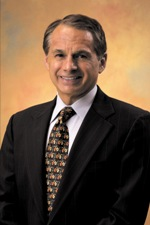
Dr Joseph C. Maroon, MD
301 Yamato Road, Suite 2199, Boca Raton, FL 33431, USA
Phone: 800.558.1267
http://www.worldhealth.net
Joseph C. Maroon, M.D., serves as A4M's Senior Vice President. Dr. Maroon is a board certified Professor and Vice Chairman of Neurological Surgery at the University of Pittsburgh School of Medicine and the Heindl Scholar in Neuroscience. A renowned neurosurgeon at the University of Pittsburgh Medical Center, Dr. Maroon obtained his medical and neurosurgical training at Indiana University, Georgetown University, Oxford University in England and the University of Vermont. His clinical and research interests have been in the areas of the development of minimally invasive surgical procedures to the brain and spine, the prevention and treatment of traumatic injuries to the central nervous system, innovative approaches to pituitary and other brain tumors and more recently complimentary approaches to inflammatory diseases associated with aging.
Working with neuropsychologist, Mark Lovell, Ph.D., Dr. Maroon co-developed ImPACTTM (Immediate Post-Concussion Assessment and Cognitive Testing). This is the first computerized system to help determine concussion severity and the appropriate timing for return to contact sports following injury. It is now the standard of care for concussion management in the NFL, NHL, major league baseball, NASCAR and is used in over 2500 colleges and high schools in the United States. For over 20 years he has served as the neurosurgical consultant to professional and college athletes in football, baseball, golf, hockey and soccer.
Honored as one of America's Best neurosurgeons for 8 consecutive years, Dr. Maroon has published four books, and has written over 250 papers and 40 book chapters. In press is his new book entitled The Longevity Factor: How Red Wine and Resveratrol Activate Genes for A Healthier and Longer Life, to be published by Simon and Schuster.
Dr. Maroon has been honored by the neurosurgical societies of Japan, Korea, Thailand, Egypt, Brazil and Lebanon for his neurosurgical contributions. He was honored by his peers when he was elected President of the Congress of Neurological Surgeons, the largest society of neurosurgeons in North America. Other outside activities include a member of the Board of Directors of Mylan Laboratories, the third largest generic drug manufacturer in the world and Chairman of the Scientific Advisory Board to the General Nutrition Corporation. He is also the Medical Director of Xenomis, a company partnered with Harvard University to develop natural products to enhance endurance and memory.
Early on, Dr. Maroon's athletic abilities earned him a football scholarship to the University of Indiana in Bloomington. There he was selected as Scholastic All American in Football. Despite his busy professional schedule, Doctor Maroon remains an avid athlete and has competed in over 60 triathlon events. These include five Ironman distant triathlons (2.4 mile swim, 112 mile bike and 26.2 run) in Hawaii (1993 and 2003), Canada (1995), New Zealand (1997) and Europe (2000). He is scheduled to participate in the Hawaiian Ironman Triathlon in Kona in 2008. He placed sixth in the Senior U.S. Olympic Triathlon in 2005. In 1999 he, along with Joe Montana and Kareem Abdul Jabaar, was inducted into the Lou Holtz Ohio Valley Hall of Fame for his athletic accomplishments and contributions to sports medicine.